


Our “It Can Wait” summer campaign was born from our own internal battle on how we spend our time – MERIT was created with the idea of the five minute morning, with the purpose of it to allow you to spend your time on other things. But in the age of social media and screentime, we’re also aware of just how many hours we dedicate to content consumption. Our personal (and so, brand) focus this summer is disconnection – what it means to log off. Social media is what drives the majority of our screentime that’s not work, so this conversation explores how much time we spend on our phones.
One of our favorite Substacks to follow is, funnily enough, about social media: Rachel Karten’s Link in Bio, where she dives deep into all things social media but also, our relationship with it. Rachel felt like the perfect person to speak to about our ruminations – turning the tables from when she spoke to our CMO Aila Morin earlier this year. Below, Rachel and Aila discuss the state of social media, creativity, and the ultimate LA morning routine.
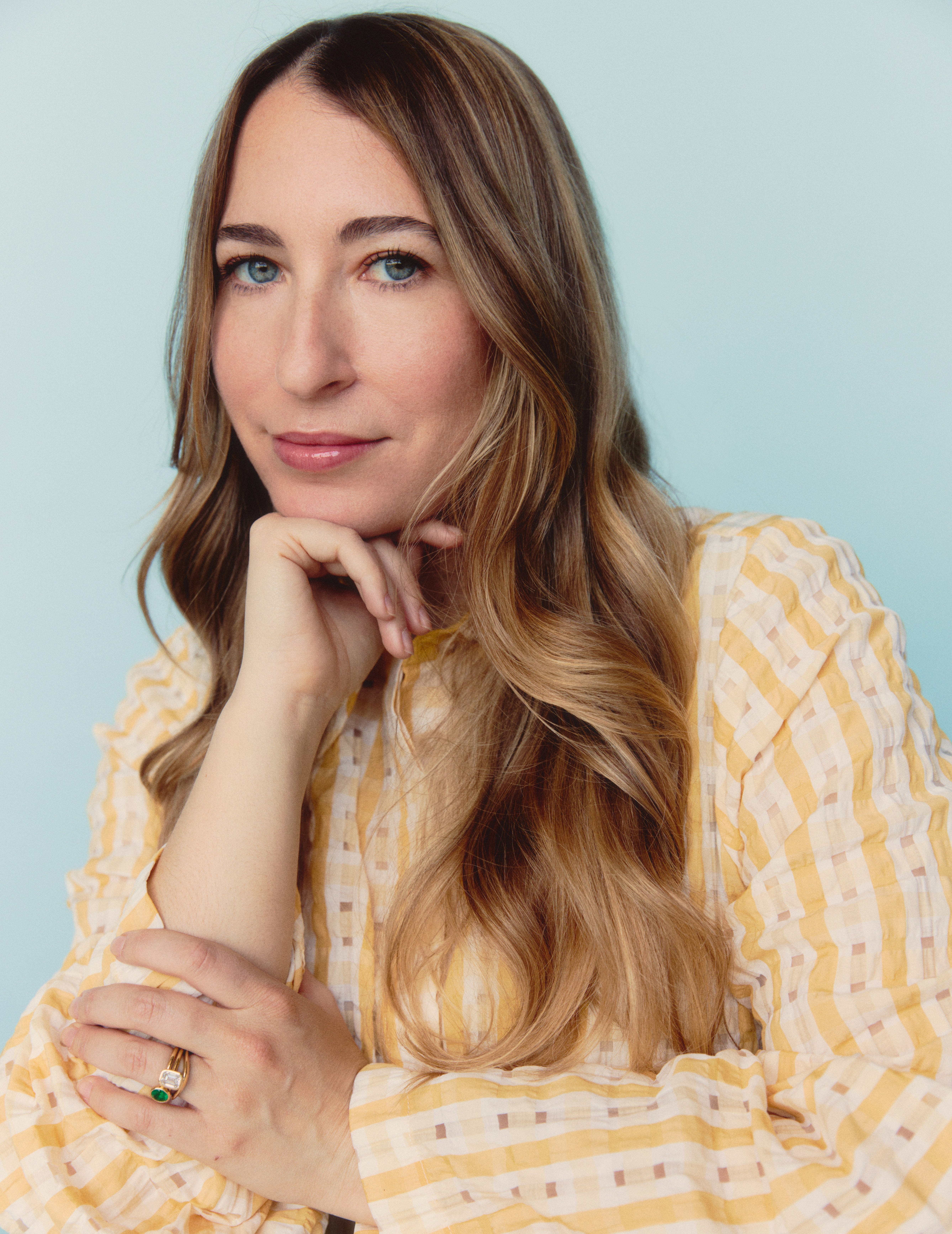
Aila Morin: You were on Substack before it was so popular. What made you want to write about social media?
Rachel Karten: It was 2021 and I didn’t know that I wanted to write a Substack per se. I just wanted to create a resource for social teams, and Substack presented itself. Parts of the platform were still in beta at the time, but I knew a few people on it, so it seemed like the right place to start.
I started the newsletter out of frustration that traditional media would interview, say, the CEO about a social media strategy. You’d get these very surface level answers about the strategy. They aren’t the ones doing the work! I really wanted to create a space where you could hear from the social media managers and marketers who were actually pressing post.
AM: And when did you know it had legs?
RK: I had grown a bit of a following from leading social at Bon Appétit magazine, so I knew at least a few people would be interested in the newsletter. But when I announced it, I got 8,000 subscribers on day one. That’s when I knew I was onto something.
AM: You’ve kind of hacked the algorithm. You essentially teach your readers how to do social media well, but you do it on Substack via written word – it’s like the antithesis of what you’re teaching.
RK: I know. I still do social media for brands and clients, so for my personal work I wanted it to feel different. I like that I can write something, people subscribe, and no algorithm is deciding whether they’re going to see it or not. I also think there’s something to being able to find someone in one place. If you want my brain, I’m on Substack. That’s where you’re going to find me.
AM: You’re basically a social media sociologist.
RK: I like to say that I’m a social media practitioner with a reporter’s edge. I wouldn’t necessarily call myself a reporter, but I enjoy thinking like one.
AM: I do think Substack is now disrupting traditional media in a huge way.
RK: I think there’s a level of trust that I have built with my audience that’s hard to capture in traditional media. My taste, ethics, and values all come into play in the work I do. I won’t cover a brand just because they are offering up an exclusive. I have to think the work is good and worthy of inclusion.
AM: This sounds silly, but do you ever worry about the future of Instagram? My concern is we’re going to stop using Instagram, because it’s all going to be forced shopping.
RK: I worry about the accounts that are gamifying it – AI accounts posting 50 times a day, fake UGC “influencers”. When brands view social media like a slot machine, constantly pulling a lever, it becomes a not-so-fun place to be.
AM: Right. We’ve also noticed on Instagram this shift from seeing content from who you follow, to more from the Explore page.
RK: I wrote an article last November about exactly that – how the FYP ate the follower. Social media used to be “social” because you’d see content from your friends. Now it’s “social” because you’re DMing a video of a stranger to your friends. It’s a huge shift.
There’s no going back, unfortunately. This era is much more profitable for the platforms. But I always warn that they shouldn’t confuse engagement with enjoyment. I do worry that people are showing up more exhausted by social media. Feeling like they regret their scroll. What does that mean in the long term?
AM: I’m sure this comes up in every conversation you have, as it does for me: AI.
RK: One of the scariest things I am seeing is that people are leaving comments like “boo AI” on brand posts that are 100% not AI. Seeing is no longer believing!
As a brand, it’s frustrating to post a photo that you spent so much time and money on producing, and everyone is like, “Is this real?” We are seeing accounts get ahead of it by tagging the artist or photographer. People want to know what they are seeing is real. Especially for makeup–I want to know that the mascara is actually working!
I wrote recently about how people want to see evidence of effort right now, because they’re being sold this future of frictionless AI.
AM: Right, as if everything they see just appeared off of a conveyor belt.
RK: That’s why we’re also seeing a rise in brands telling human interest stories. Real people, not influencers. Characters we can fall in love with…
AM: That’s what drew us to Deborah – she’s an 89-year-old MERIT fan; we flew out to shoot her in a matter of hours. That post went pretty viral because people appreciated the humanity of it; we were getting the sweetest comments.
RK: I loved that post so much. It’s a story that no traditional “influencer” could tell. One thing about this “FYP ate the follower” era of social is that you’re seeing influencers with millions of followers have trouble reaching their audiences now. Views are no longer owed, they are earned.
AM: I’d say influencer marketing is not at its peak, but the form in which its happening is peaking.
RK: It’s all about the story. You can have 300 followers, but if your story is interesting, you can get a million views.
Influencer culture – seeing them get these lavish experiences and gifts – isn’t a story that resonates with many right now.
AM: An apt question: when do you know when it’s time to log off?
RK: My husband and I end every day with a walk together, so that’s usually when I know it’s time to shut my laptop and Brick my phone.
It does feel like we’re in a moment where everyone wants to prioritize logging off more.
AM: Do you think we’re getting better or worse at protecting our attention?
RK: Worse…to hopefully get better. Colin and Samir use this term “regrettable minutes”. We spend so much time in social media apps, but how much of it actually feels worth it once we’re out? I think those “regrettable minutes” will slowly help people get better at protecting their attention.
AM: You spend so much time observing culture online. Where do you go to notice things that the internet can’t teach you?
RK: I watch a lot of movies – old movies, documentaries. That’s where I get most of my inspiration. Social media moves fast but the rules of good storytelling really haven’t changed much.
AM: People always ask me this, and my answer is not convenient, but: where or when do you feel the most creative?
RK: I feel most creative at the worst times. One minute before I fall asleep, while I am showering, in the middle of a movie. I’m very thankful for the Notes app.
AM: And finally, what does your Five Minute Morning look like?
RK: My two dogs wake me up and we hang out in bed. They’re mother and daughter, and so sweet. Then I’ll make an iced matcha. I’ve been into Rocky’s Matcha at home. By then it’s usually time to send the newsletter, since the East Coast has three hours on me.
AM: This is such an LA morning, I love it.

You can follow Rachel on her Substack and Instagram.

loved our chat so much! thank you for having me!
Love her work! Excellent choice.